Michael Fried’s thesis, in Chapter 10 of his book, Why Photography Matters As Art As Never Before, centers on the concept of the object or “objecthood” in art and in photography as art. Fried posits that there is an opposition between “good” and “bad” modes of “objecthood”, as suggested by comparing minimalist art, an artform in the 1960’s that focused heavily on the meaning of objects, to the photography of Bernd and Hilla Becher and their followers at the Kundtakademie in Düsseldorf. Fried draws his thesis not only from his knowledge of art history, but from the writings of four philosophers: Immanuel Kant (1724-1804), Georg William Hegel (1770-1831), Ludwig Wittgenstein (1889-1951) and Martin Heidegger (1889-1976).
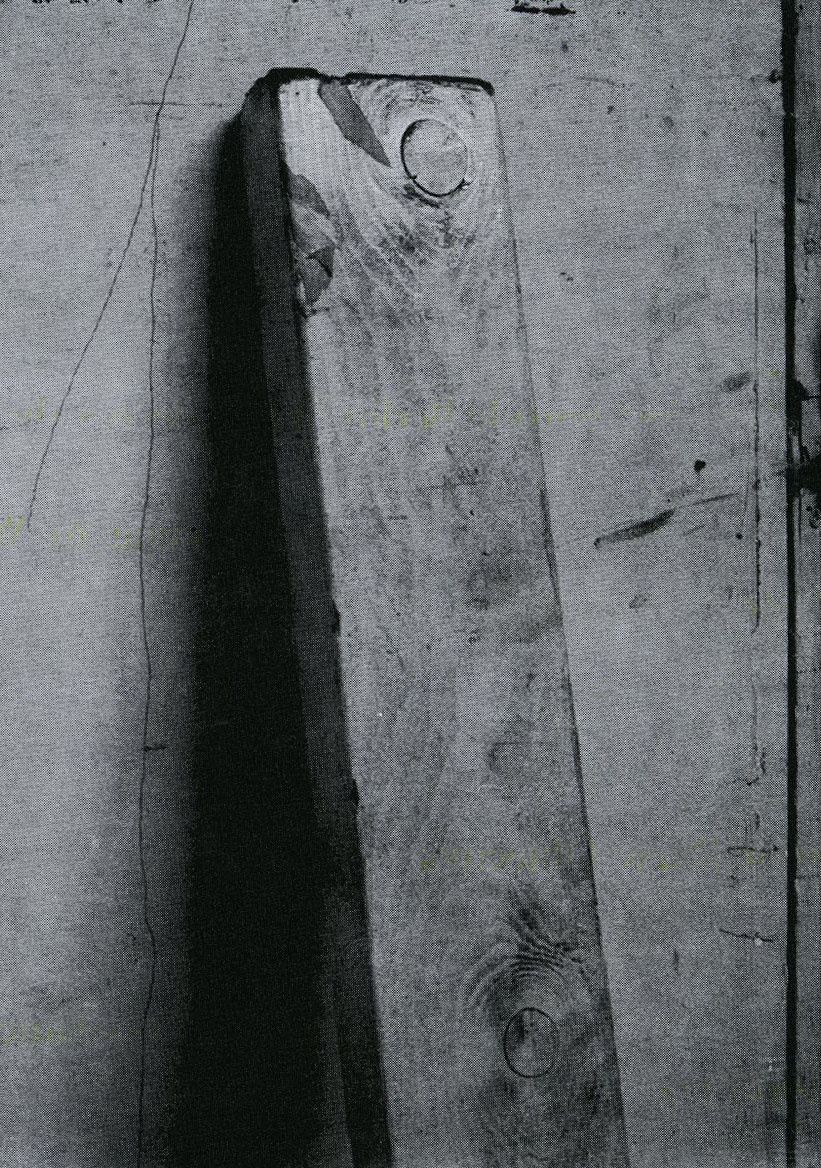
James Welling, Lock, 1976
Michael Fried begins his argument with James Welling’s photograph, Lock, 1976, and ends it by analyzing a photograph by Jeff Wall, Concrete Ball, 2003. Most of his argument, however, is based on the body of work, i.e. the photographic Typologies, of Bernd (1931-2007 ) and Hilla Becher (b.1934). Fried suggests that James Welling’s Lock, 1976, has the qualities of, what he refers to later in the chapter as “good” objecthood, i.e. systematic composition, specificity and what he calls “real” literalness. In Fried’s words, “the darkness of the picture underscores what might be called the thingness of the plank forcing the issue of the plank’s density, its weight, its roughness to the touch…” Fried returns to these themes in his more lengthy treatment of the work of Bernd and Hilla Becher, again, underscoring the shortcomings of minimalist artists, whose works involved only what he referred to as the “projection” of objecthood, characteristically in the form of a more or less simple, three-dimensional shape or gestalt”.
We can see Fried’s critique of Minimalism demonstrated in the sculpture, Untitled (L-Beams), 1965, by Robert Morris. Like other Minimalist artists, Morris’s work is characterized by a systematic process, three-dimensional structures, a self-referential quality and, what Fried refers to as, “generic objects” which create an “abstract literalness”.
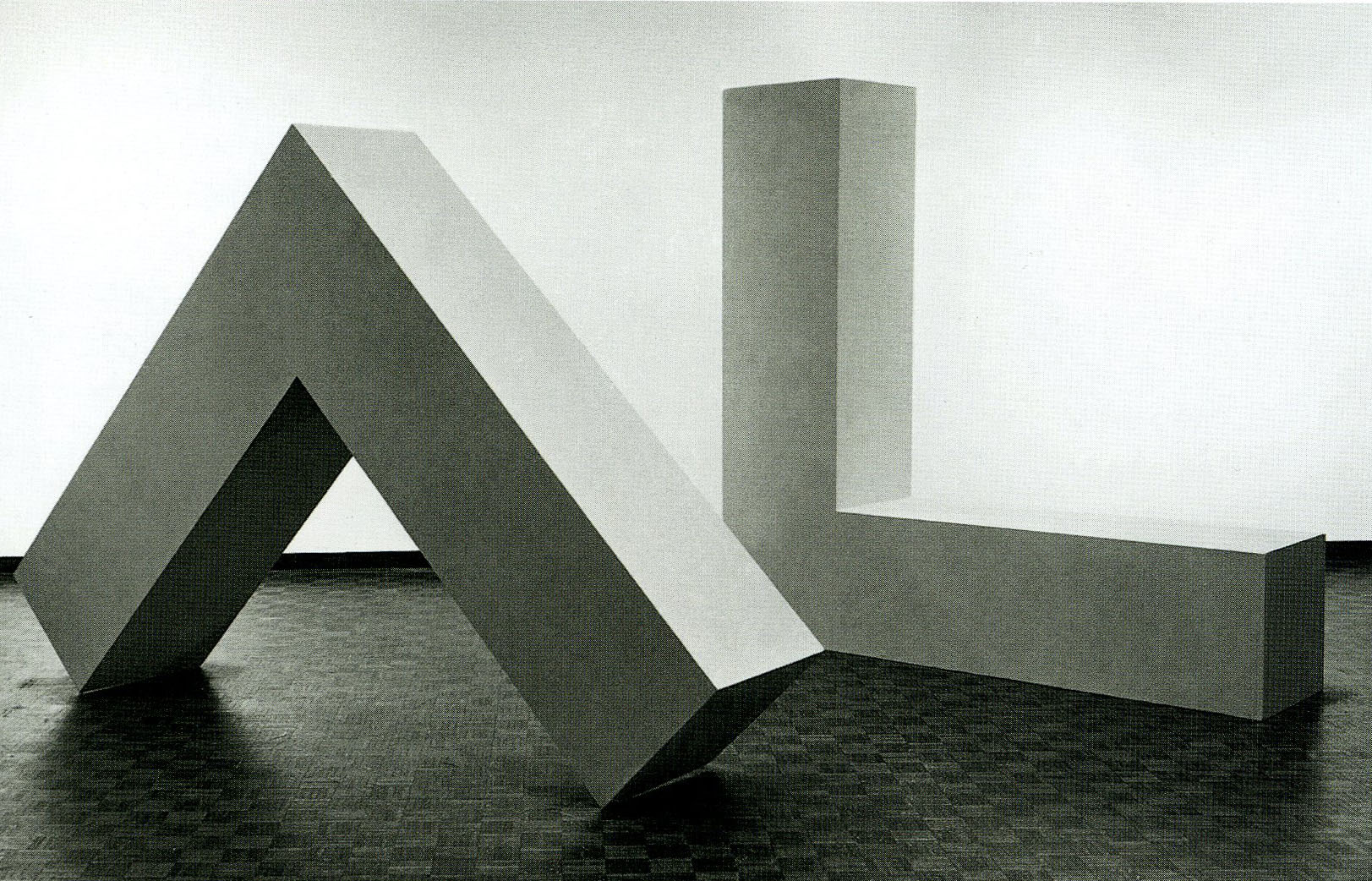
Untitled (L-Beams), 1965, Robert Morris
That is, unlike Welling’s Lock, 1976, there is little specificity (i.e. thingness) in Morris’s work . While Welling’s photograph expresses the concrete nature, i.e. the “feel”, of the wooden plank, Morris’s L-Beam series, while quite aesthetic in form, seems to be more about the idea of the object. In speaking about another minimalist artist, Carl Andre, Robert Morris touches on what Michael Fried feels is, perhaps, the greatest fault of literalist art, i.e., its emphasis on the experience of the viewer.
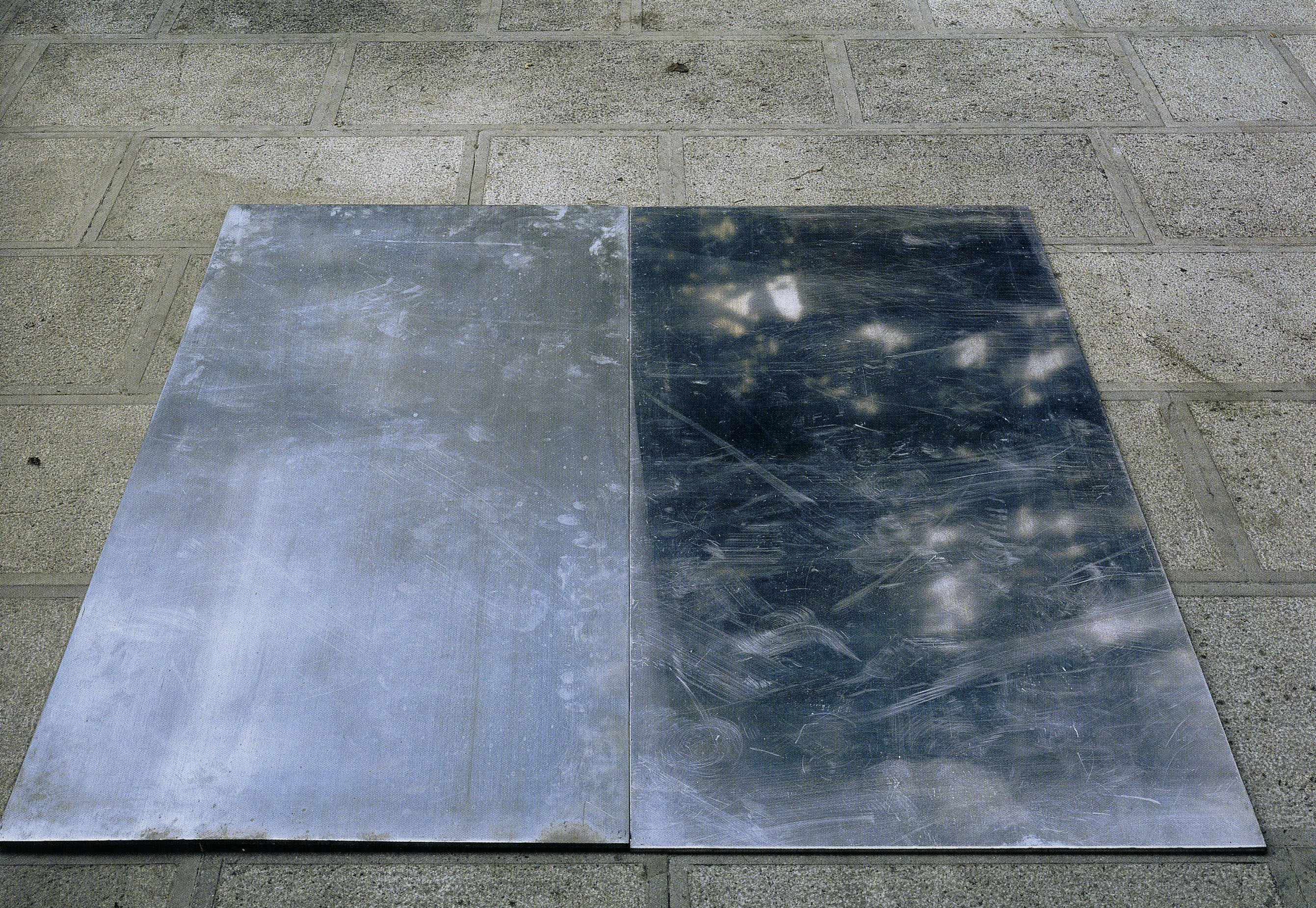
Aluminum-Zinc Dipole E/W, 1989, Carl Andre
Carl Andre, according to Robert Morris, “was interested in the idea that the object…was defined by the situation” “Whereas in previous art, what is to be had from the work is located strictly within it, the experience of literalist art is of an object in a situation – one that, virtually be definition, includes the beholder.” Michael Fried clearly distances himself and the work of Bernd and Hilla Fried from this idea by stating that “Nothing could be further from the ontological status of the objects in the Bechers photographs”.
Bernd and Hilla Becher began their collaboration in 1959 and married a few years later. They followed what Enno Kaufhold, in a special edition of Aperture on German Photography, defines as a “long tradition” of photographic photographers” who used “photographic precision to show essential things”. Kaufhold includes Karl Bossfeldt, August Sander and Albert Ranger-Patzsch within this tradition, whose work in the 1920’s and 1930’s “implied an ideal of photographic objectivity”. 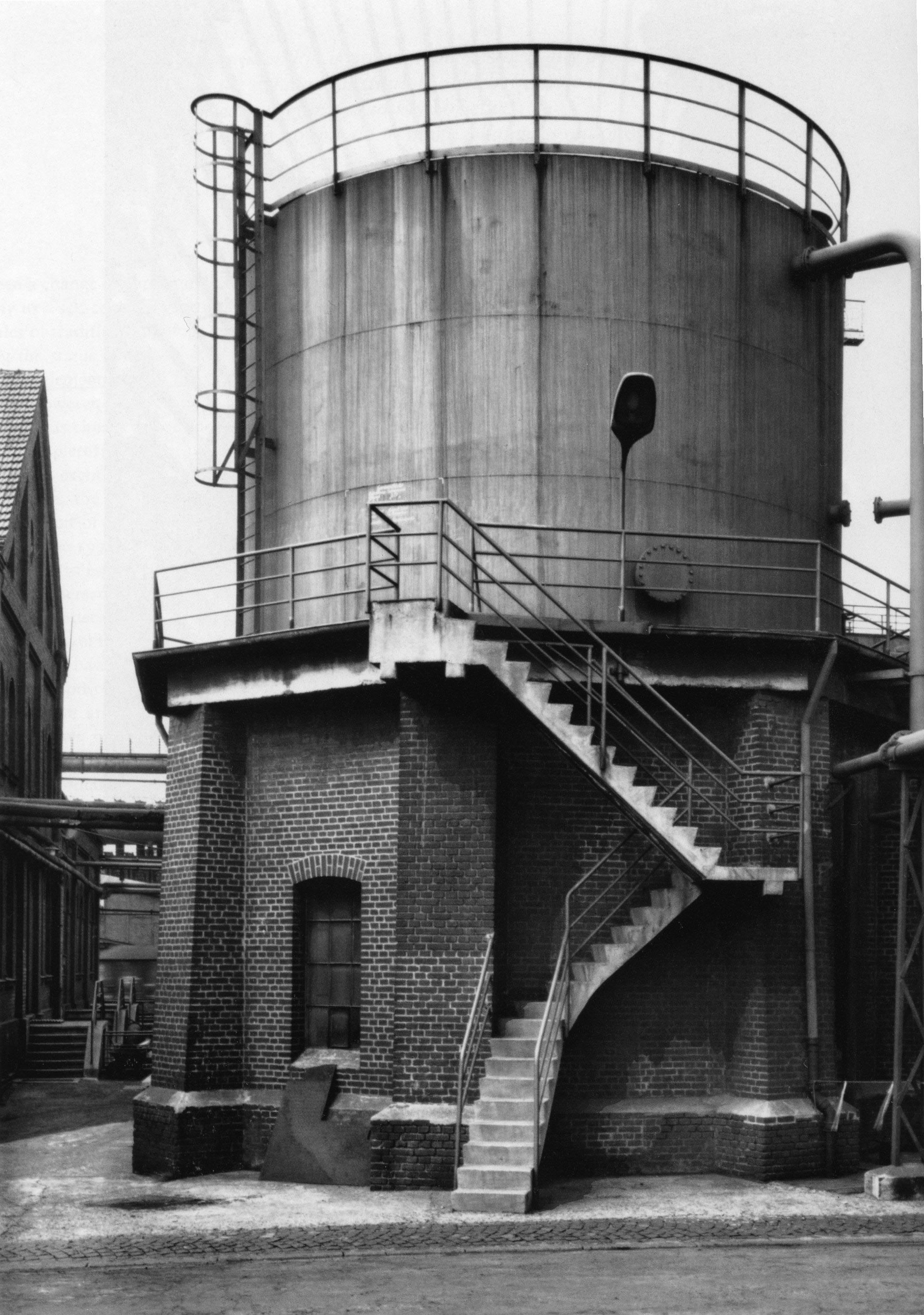 Early in their collaboration, the Becher’s settled on a typological approach to photographing industrial structures which they referred to as “a kind of nomadic architecture which had a comparatively short life”. These industrial structures included water towers, cooling towers, gasometers, blast furnaces and winding towers. As Fried notes, “a significant aspect of their achievement was thus to document a rapidly vanishing realm”. The Beecher’s approach included a number of consistent strategies aimed at maximizing objectivity. This included a raised vantage point, head on perspective, diffuse lighting and silhouetting and significant detail and depth of field. This is summarized by their quote in Fried’s chapter, “principally you could say that the object is there in its entirety and should be depicted without alteration in its typical form”. Another critical concept which underlies their work is that “form is revelatory of function”. Their industrial structures were created, as Fried points out, “without aesthetic intention”, a “form of architecture that consists in essence of apparatus, that has nothing to do with design, and nothing to do with architecture either”.
As the Becher’s progressed they moved to the composite photograph as an essential component of their work.
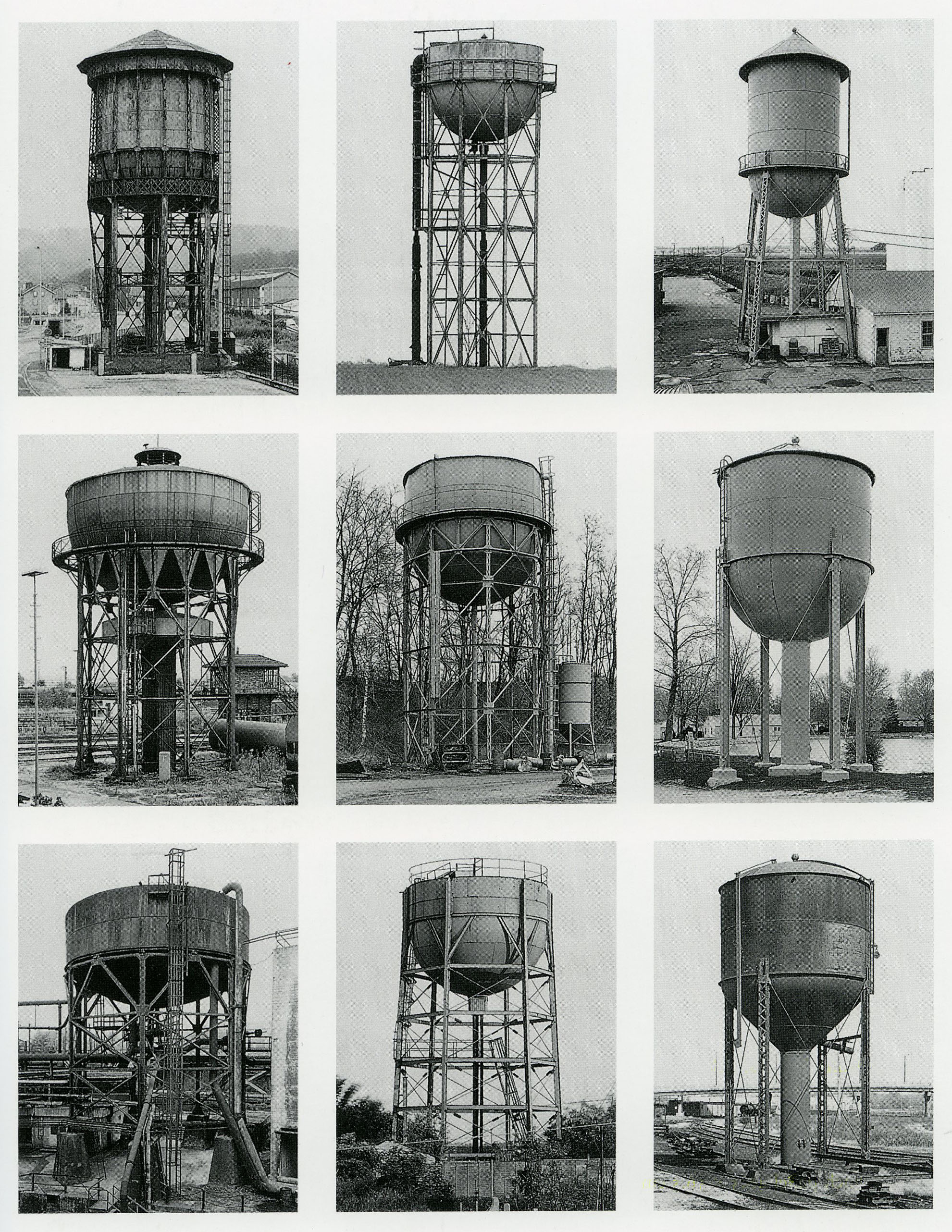
Water Towers, 1967-83, Bernd and Hilla Becher
As they state, “there was a particular moment when we placed several cooling towers alongside each other and something happened”. (Fried) The act of placing the photographs on a grid enhanced their ability to show the essence of things. The photographic composite becomes a vehicle to evoke, not depict, the type. In the typology of August Sander, for example, “the individual is representative of its type”. In the Beecher composite the individual things are what Fried calls “surrogate objects”.
In closing his chapter, Michael Fried refers to a photograph by Jeff Wall, Concrete Ball, 2003, to make his argument about what he calls “good” and bad “modes of objecthood”.  Again, he refers to the work of Minimalist artists, such as Carl Andre, as a work of “almost pure theatricality”, dependent on “enticing the viewer” into the situation. That is, the lack of specificity, generic quality of the objects and their abstract literalness only offer a “projection of objecthood”. As opposed to this, we find in Jeff Wall’s photograph the essential qualities of “good objecthood”. The high specificity, literalness and “thingness” of Wall’s photograph exemplifies, for Fried, the quality of “good objecthood” in art.
Sources
Michael Fried, Why Photography Matters as Art as Never Before, Yale University Press, New Haven, 2008
Enno Kaufhold, The Mask of Opticality, Aperture, #123, Spring, 1991, New York, N.Y.
Categories: Uncategorized
 petercoolsen