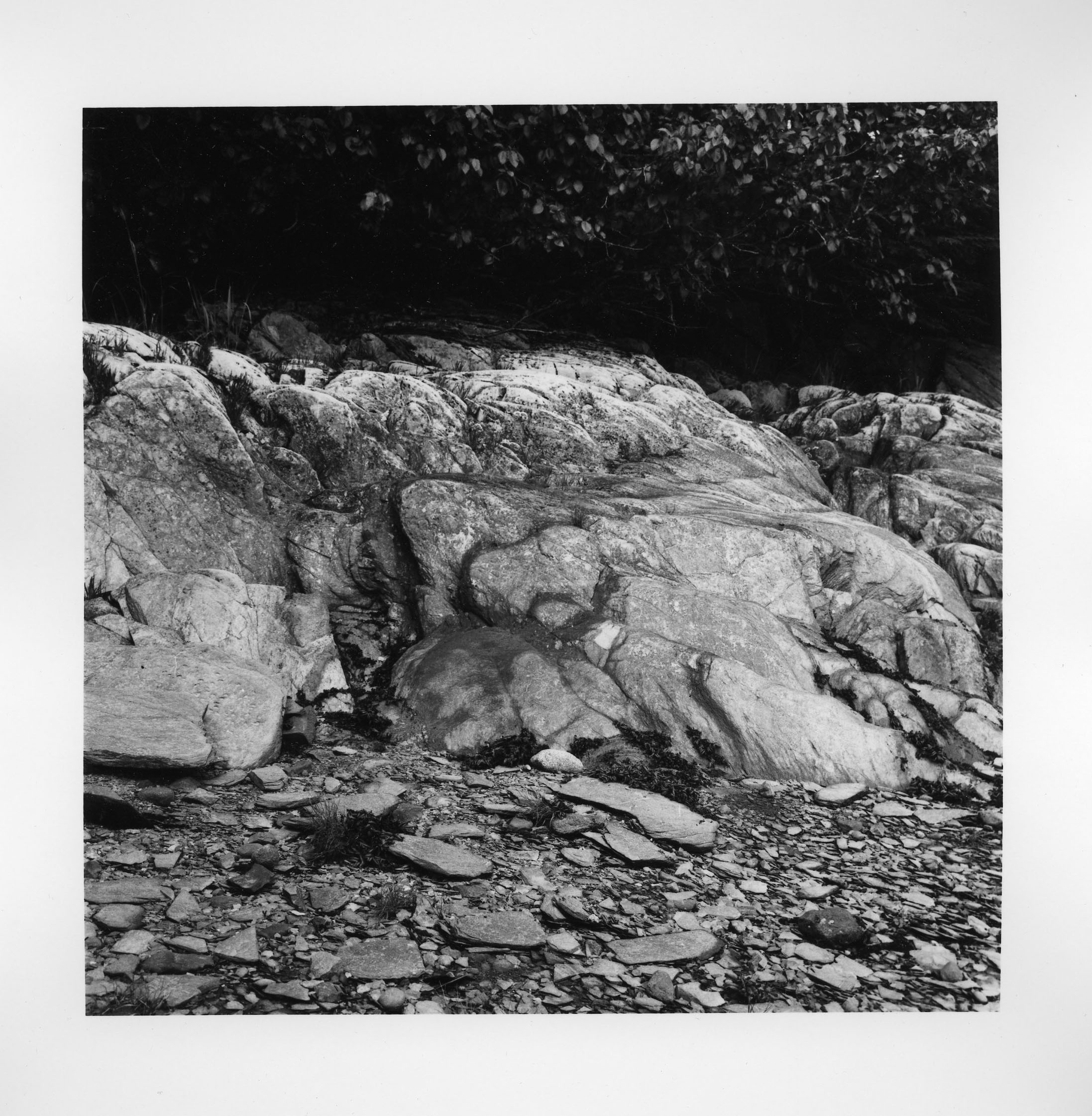
Naha Bay Rock Formation Peter Coolsen
Landscape exerts a subtle power over people, eliciting a broad range of emotions and meanings that may be difficult to specify… As the background within which a figure, form, or narrative act emerges, landscape exerts the passive force of setting, scene and sight.
W. J. T. Mitchell
Landscape, as a subject, emerged at the birth of photography and has continued to capture the imagination of photographers over the entire history of the medium.

The Golden Age of Landscape Photography
This analysis will explore the evolving, and sometimes conflicting, concepts of American landscape photography which, like the land itself, has permutated over the past 175 years.The broad historical outline of American landscape photography moves from what Andrea Gray refers to as the “golden age” of American landscape photography (1839-1885), through Pictorialism, and to the sharp, high contrast images of western landscapes by Ansel Adams, Edward Weston and their followers, such as Wynn Bullock, Paul Caponigro and Brett Weston,  to the “revisited” landscapes of Robert Adams and Lewis Baltz showing “mans destruction of the land” and, finally, to the more imagined landscapes suggested by photographers such as Jerry Uelsmann, Park and Harrison and others. This, however, is only a limited statement about the evolving “look or style” of American landscapes. Underneath the broad historical brush are changing fundamental concepts about the nature of landscapes. The authors WJT Mitchell, Zachary Cahill and Rebecca Solnit provide us with helpful ideas with which we can examine the genre of landscape photography.
In his preface to the second edition of Landscape and Power: Space, Place and Landscape, WJT Mitchell moves away from his emphasis on the concept of power, featured in the first edition, to concepts of space and place as the “fundamental categories of analysis”. For Mitchell, space and place represent two different aspects of the construct of landscape. Space takes into consideration “vectors of direction, velocities and time variable” and comes to life, in Mitchel’s terms as, a “practiced place”. Space requires movement, as when a street is transformed into a space by walkers. Place, on the other hand, is associated with stability and concreteness. It is a “definite, bounded space”. Mitchel moves further with this argument and suggests that we can think of space, place and landscape as a “dialectical triad”. Place is a specific location, space is a site activated by movement and landscape is that site encountered as an “image”. For example, Lee Friedlander’s landscape of a scene in Central Park in New York City is at once a space activated by movement (i.e. human activity), located in a specific place (Central Park in midtown Manhattan) and “consumed” as a picturesque landscape created by the famous landscape architect Frederick Law Olmsted.
The manner of thinking of photographic landscapes as a triad, consisting of a concrete place and an activated space that is visualized as a “landscape”, can be helpful in trying to understand the complexity of what we call landscape. In An Open Land: Photographs of the Midwest, 1852-1982, McKinney talks about his landscape photographs taken in Central and Southern Illinois.

Rhondal McKinney, Illinois Landscape 1982
McKinney’s photographs express a specific place, e.g. Peotone, Illinois, an agricultural space which has been “ practiced” or altered by farmers and an end product called a “landscape”, which elicits, what W. J. T. Mitchell referred to earlier as “a broad range of emotions and meaning that may be difficult to specify”.
In her chapter, “Every Corner is Alive”, in Storming the Gates of Paradise, Rebecca Solnit discusses the contribution of Eliot Porter, the “father” of color landscape photography in America. Solnit brings us to a point in historical time (i.e. post-Hiroshima America) which bears heavily on Porters vision and his dual role as landscape photographer and environmentalist. Much of the article is dedicated to revealing Porter’s place as an environmentalist and, in particular, his role as an activist with the Sierra Club.
However, more relevant to this discussion, and in consort with the Mitchell article, Solnit introduces a broadening of the dialectics of landscape photography to include concepts of nature versus wilderness, romantic versus truthful and grand scenic landscapes versus “systemic landscapes”. Solnit uses the differing visions of Ansel Adams and Eliot Porter, as a means of expanding on the dialectics in landscape photography.

Ansel Adams used black and white photography, almost exclusively, and favored the grand, impressive and highly romantic images of western landscapes. Eliot Porter focused on smaller natural subjects (flowers, rocks etc.) reflecting the quotidian, everyday features of the land, that which is representative of the “systemic landscape”. Porter photographed, almost exclusively, in the new color, dye transfer process in photography and felt that photographers who rejected color were “denying one of our most precious biological attributes -color vision – that we share with relatively few other animal species”.
In Solnit’s terms, Adams favored the grand, more people-centered views

Eliot Porter
(anthropomorphic) of the landscape with an emphasis on beauty and Porter favored flat surfaces, up close images and, often, hidden horizons, suggesting an emphasis on truth. That is, Porter focused on trying to express the real, rather than an interpretation of the real.
There are. of course, other dialectics which can be considered in a discussion about landscape photography,
such as the distinction between realism and abstraction in landscapes. While photographers like Eliot Porter featured highly representational images, there is also a genre of more abstract landscape photography which is more about form than content. Aaron Siskind and Harry Callahan made landscape photographs in this tradition.
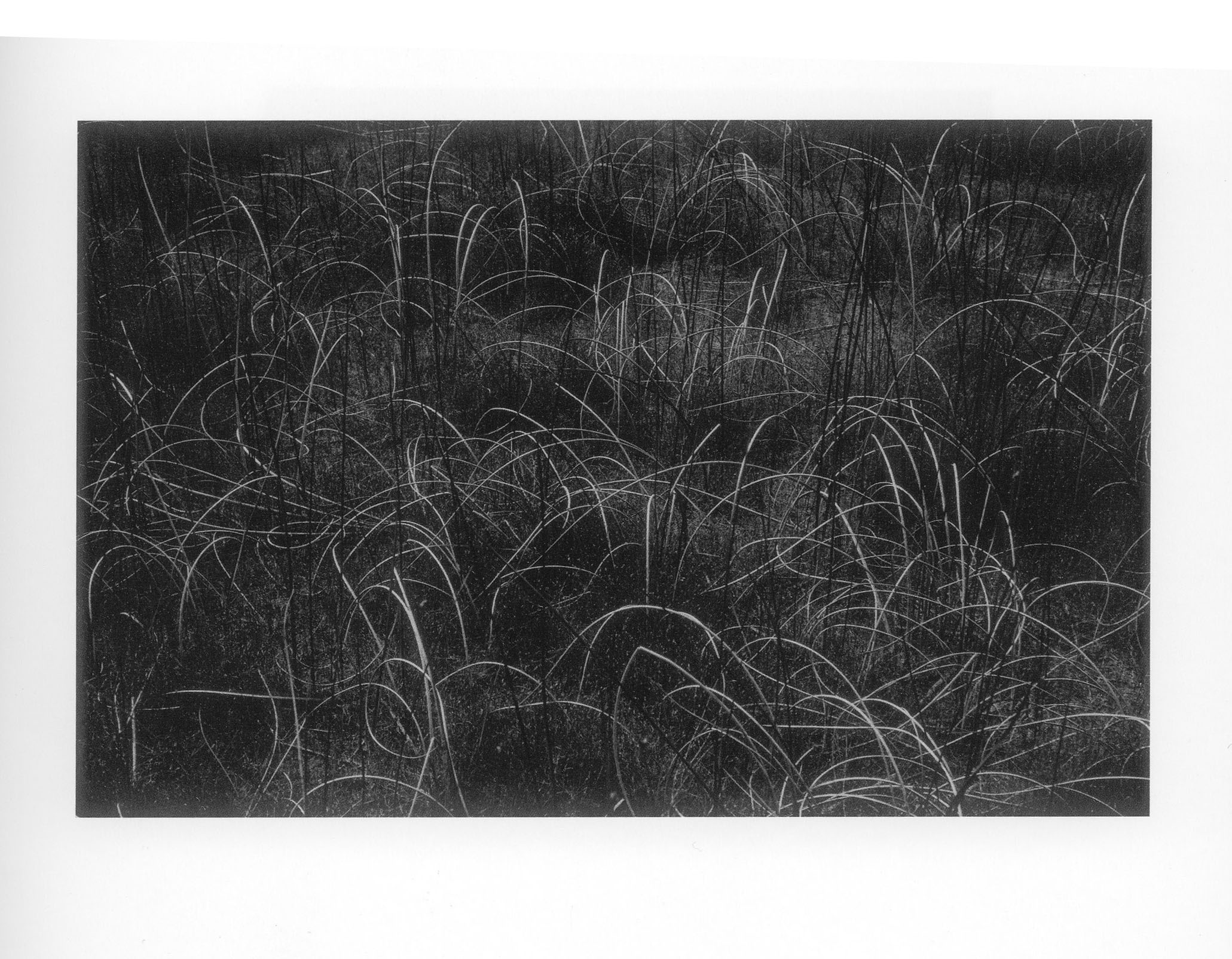
Harry Callahan
In his article, “Earth without Aura: Noes on the Psychology of Contemporary Landscape”, Zachary Cahill discusses the dialectics of “interiority and exteriority” in contemporary landscapes. Cahill suggests, that man has ‘lost touch with an authentic human experience of nature” or what Walter Benjamin refers to as “aura”. Contemporary landscapes, Cahill suggests, ultimately “dissolve the distinction between inside and outside”.
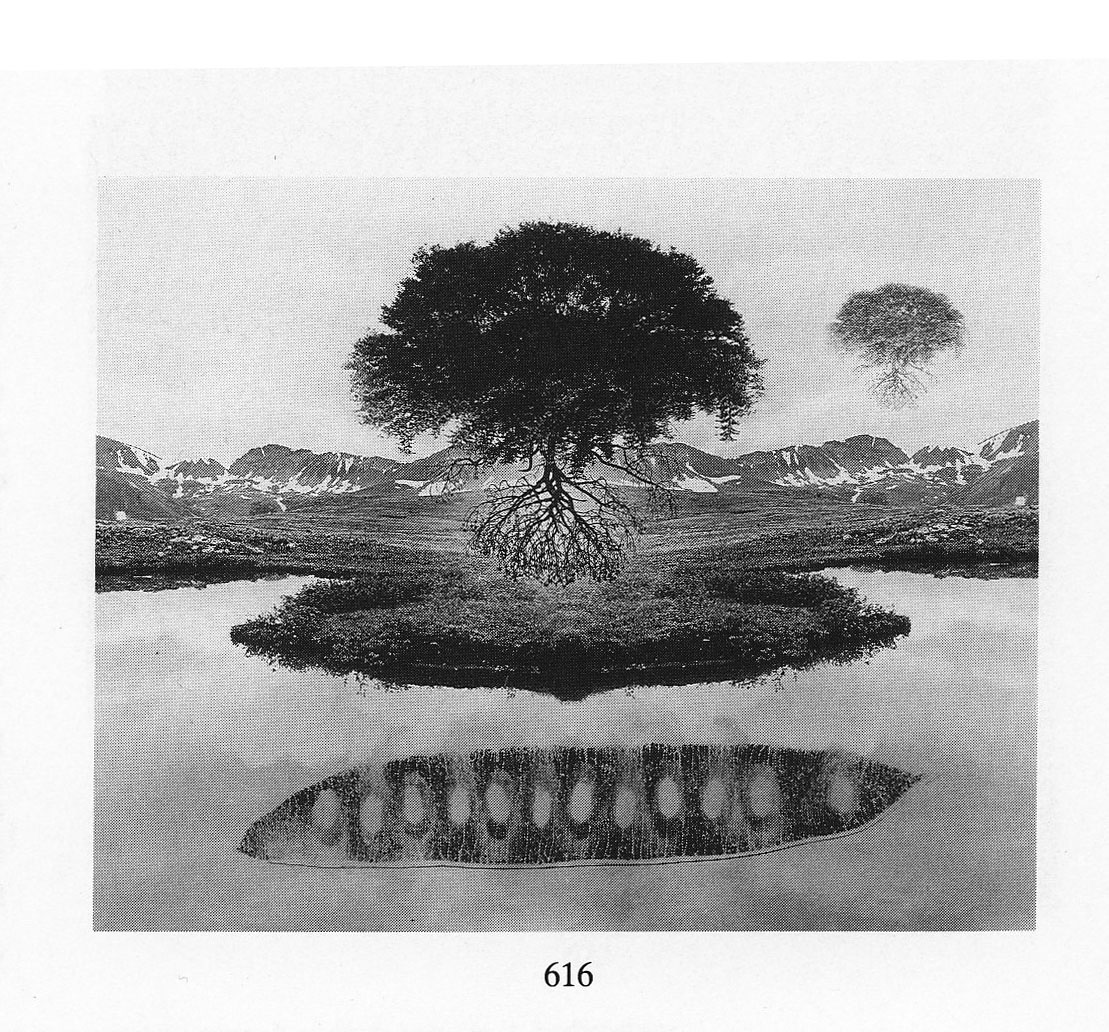
Jerry Uelsmann
Cahill seems to be talking about the emergence of imaginative landscapes which, although existed in earlier photographs, like those of Jerry Ueslmann, are much more elaborate and accessible today given the advent of digital photography.
While some say that traditional landscape photography may be passé , Rhondal McKinney provides an alternate narrative concerning the “subtle power” of traditional landscapes.
“Late on another spring day I was standing with my camera in a bean field waiting for the sun to drop a little lower in the sky. A pickup truck came down the road and stopped behind mine and a young farmer got out and started slowly toward me. This happens to me often and it is always a moment of some tension for me since I have been ordered away a few times. Most of the time, though, the farmers I encounter have enough understanding of what I am doing that they let me finish my work. This young farmer stopped about twenty yards away and watched me make some camera adjustments, go under the dark cloth and come out again. I spoke first. Sometimes I can head these guys off. “I’m just waiting for the sun to get down a little, then I’m gong to make a picture of this field”.
The ground was falling away from me slightly and it rose again a few hundred yards away and the rows formed by the planter swooped toward a ridge at the far side of the field. About half way into the picture the land rose and fell again, but this was very subtle. You can’t see it except under certain lighting conditions and during certain stages of cultivation.
The farmer nodded and look pleased. “I’ll tell you, he said,. “When the sun sits on that ridge over there is just about the best time of day for anything around here-picture taking, you name it”. His voice had the pitch and tremor of emotion in it and I thought he would speak again, but the throat is the organ of wisdom in Midwesterners and his choked off whatever he would have said then. The farmer looked away and seemed embarrassed at having betrayed his emotion.”
.
Categories: Uncategorized
 petercoolsen