
The Children of Ham
Race is a concept of all too human proportions, one that arguably does not exist outside the dark and dubious ends towards which it has been put to use. Although a biological function, it remains a social fact whose history more than compensates for all that science disavows.
Hamza Walker
Introduction
When photography was invented in 1839, the African diaspora was well underway in America and the slave system had been established in the south on a large economic scale. One decade later, in 1850, the new medium was used, perhaps for the first time, towards those “dark and dubious ends” described by Hamza Walker. 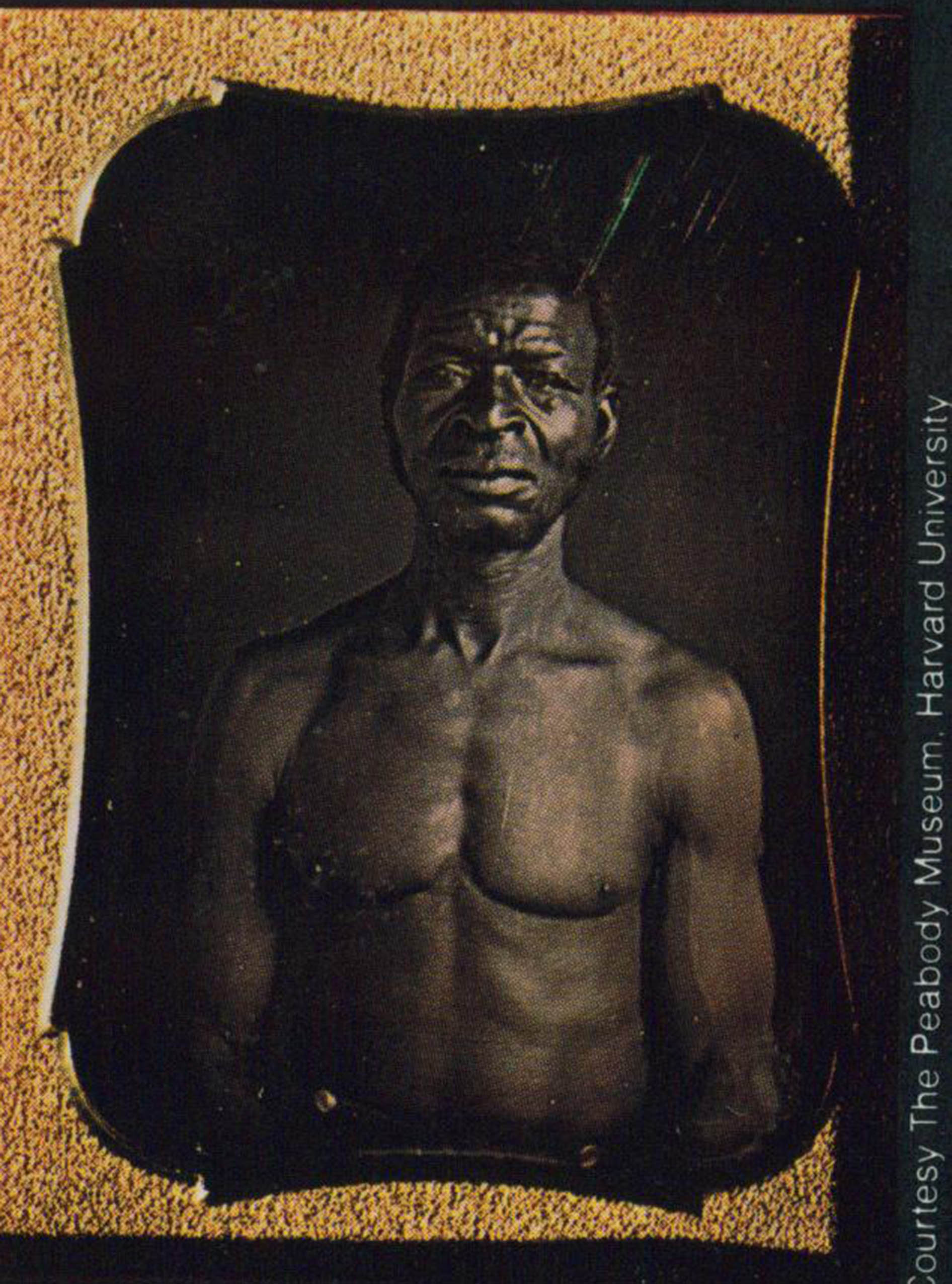 At the request of Louis Agassiz, the “father of American natural science”, a series of daguerreotype of African-born slaves were created in Columbia, S.C., as evidence that “Negro subjects were members of a separate and much less equal human species”. This, so-called, scientific proof was enlisted to justify the position of slaveholders before the civil war. Since that time, photography has been “front and center” in the dialogue about race in America. It is the contention of this brief analysis, that photography has played both a positive and a negative role in the presentation of race in America, by propagating black stereotypes, as a means of social control, and by offering a positive alternate narrative about the experience of African-Americans in the United States.
Photography and Social Control Perhaps the social control function of photography was most evident in photographs taken of the lynchings of black men in the southern United States in the late 1800’s and early 1900’s. These images do, of course, serve as a documentary record of these tragic events, but, perhaps more importantly, they function as a warning to African-American slaves and freemen regarding the brutality of social control and the penalty one must pay in the face of it.
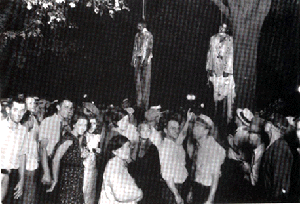
Double Lynching in Marion
As Holland Carter suggests in his treatise on race, “photography, a medium with built-in allure and an undeserved reputation for truth-telling, has done much…to create and perpetuate this whole fiction.”
In another example of this, a Stereoview created in the late 1800’s entitled, These are the Generations of Ham, photography presents enslaved Africans in a negative and pre-destined light. The reference to the Children of Ham, taken from the Book of Genesis, were said to be cursed with “blackness” by white supremacists and used in justifying slavery. Ham was one of the three sons of NOAH and it was his son, Cannon, who was cursed by his grandfather as destined for slavery. Similarly, photography has portrayed other “racial” groups, such as Native Americans in a negative and less than truthful light. The extensive photographic record of Native Americans taken at the turn of the 19th century, by Edward S. Curtiss (1868-1952), were constructed in a beautiful, but highly romanticized manner, ironically during a time in which Native American tribes were being isolated from white society and “relocated” to barren reservations. We see this experience repeated once again in cities like Chicago, during the early 1960’s, when urban, cement “reservations” such as Cabrini Green and the Robert Taylor Homes were constructed, as a means of containing and isolating African-American families on the south side of the city. Here, again, photography had an important role to play in telling the story of urban renewal.
Photography as Social Conscience In contrast to photography’s negative influence on race, the medium has consistently offered an alternative, more empathic view of the African-American experience in the United States. There is a tradition of photographers, African-American and white, which has consistently treated African-Americans in a sympathetic, humanistic and sometimes noble manner.

A Man in a Bowler Hat, 1976 Dawoud Bey
James Van Der Zee, Gordon Parks, Walker Evans, Roy DeCarava, W. Eugene Smith, Aaron Siskind and, more recently, Dawoud Bey are members of this socially conscious tradition in photography.
Another example where photography focused, in a positive way, on the accomplishments of black Americans is the field of music, most importantly regarding the African-American contribution to the creation and development of jazz.  These photographs, like the image below of Dexter Gordan, by Roy DeCarava, presented black musicians in what Thelma Golden calls the development of “freestyle” or improvisation.
The role of photography in regards race in American was most evident during the civil rights era. Perhaps this was documentary photography’s “greatest hour”, in that photographs, like that of the marchers in Selma, Alabama being sprayed with powerful water hoses by police, served to enlist the conscience of many white Americans regarding the plight of African-Americans in this country.
Conclusion The conundrum of race in America continues to haunt us as much today as ever before. It is evident in the mostly drug-related killing of black youth on the south side of Chicago, as well as in the recent killing of young African-American men by police officers in Ferguson, Missouri and New York City. Once again, photography is called to act as an arbitrator of “truth”, bringing us to the virtues and the limitations of the medium. For while photography, perhaps more than any other visual form, can be used as a means of documenting reality, it must be re-iterated that photography can be miss-used and, even when it is used truthfully, can only provide a “slice of the truth” . Photography will never be able to fully reveal the total complexity of its subjects or that which is in the minds of men and women taking or captured by the photographic image. In his paper on race, Howard Winant suggests one possible way through the conundrum of race.
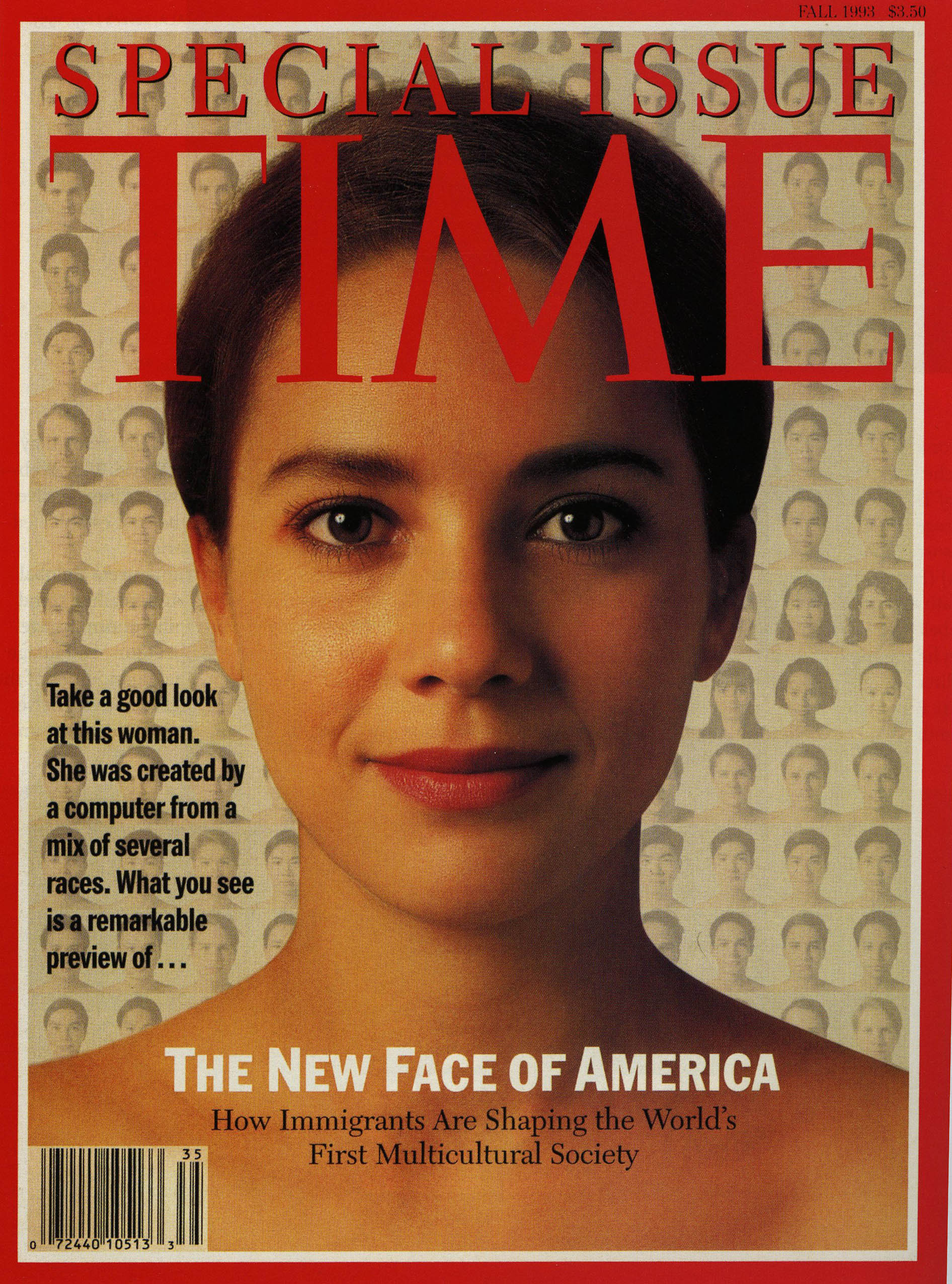
The Human Face in America
“For it may be possible to glimpse yet another view of race in which the concept operates neither as a signifier of comprehensive identity for of fundamental difference, both of which are patently absurd, but, rather as a marker of the infinity of variations we humans hold as a common heritage and hope for the future”.
Sources
Holland Cotter, Photography Review; Cameras as Accomplices, Helping Race Divide America Against Itself
Howard Winant, The Theoretical Status of the Concept of Race
Greg-Foster Rice, Object Lessons
Thelma Golden, Freestle
Categories: Uncategorized
 petercoolsen